ADVENTURE HIGHLIGHTS
1. Arriving at Lukla Airport
The adventure starts with the most exciting flight to Tenzing-Hillary Airport. The Lukla plane is small, and the runway is extremely short and constructed on a slope. Your heart races as the plane lands. As the door opens, the air here is different. FRESH, CLEAN, and COLD.
Suddenly, it hits you: this is happening. The real trek starts here. No more vehicles now, just your legs and the trail. Yaks pass by with bells ringing, and trekkers everywhere adjust their backpacks and check maps. The whole place feels alive and buzzing. You feel excited and nervous, but mostly ready. Also, this is when you’d better be sure your training was enough because there is no turning back now.
2. Walking Through Sherpa Villages
Every village feels like a movie set. There are stone houses, prayer flags, kids waving at you, and old people spinning prayer wheels. The higher you go, the quieter it gets.
The trail feels personal, like it was made just for you. The locals smile and greet you with Namaste even when they are busy carrying heavy loads. The small tea houses become your home for the night, and hot tea feels like gold after hours of walking. You eat dal-bhat, stare at the stars, and sleep like a rock. The vibe is pure peace.
3. Seeing the First Gokyo Lake
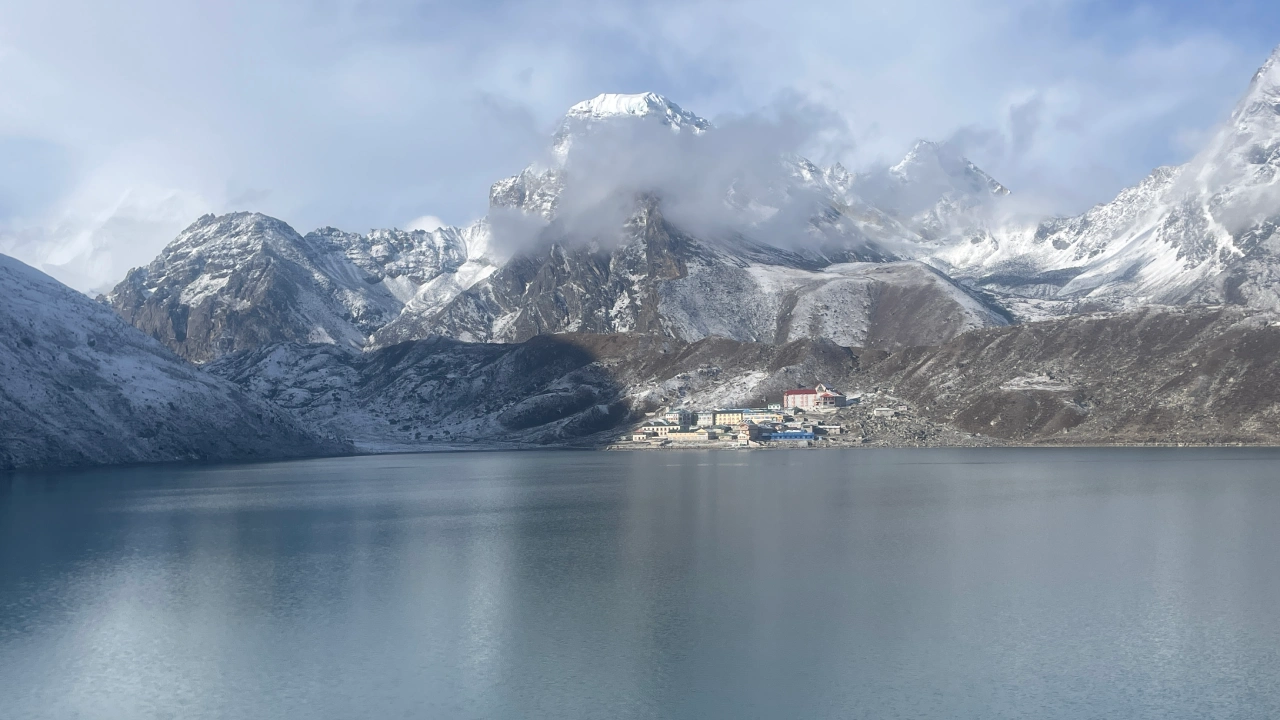
When you finally reach the first Gokyo Lake, it hits you like magic. The water is unreal blue and so still that you can see the mountains reflected perfectly. It feels too calm, too beautiful to be real. You keep walking and reach the third lake, which is the biggest.
It is less crowded than Everest Base Camp; it is quiet, sacred, and chilly. You can just sit and look and stare for hours. The mountains look closer here, and the air is so light you can feel
your heart pounding stronger. But it is all very worth it every step, every hour you walked to get here.
4. Gokyo Ri Climb (5,357 m)
The trek to Gokyo Ri is difficult as it is quite steep and extremely high. Your legs feel heavy as you have to stop and catch your breath every few minutes or so. But the scenery? Well, from the top, everything looks so beautiful. Even just peeking out gives you the glimpse of the tallest mountain in the world, Everest, and other mountains like Lhotse, Makalu, and Cho Oyu all at the same time.
The whole of Gokyo Valley can be seen as it stretches right before your eyes. And even the lakes sparkle like mirrors with the massive Ngozumpa Glacier being the main highlight. You simply forget your tired legs. You feel small and yet you are proud. You feel like standing at the top of your own world when you stand at Gokyo Ri.
5. Walking Beside Ngozumpa Glacier
This part of the trek feels wild and raw. The Ngozumpa Glacier is huge and cracked at some parts; it’s clearly seen. Sometimes it makes strange sounds, like it is literally breathing. You walk beside it for hours, and it feels like being on another planet, no trees, no color, just rock, ice, and wind.
The silence here is different, heavy but beautiful. The trail is not always clear, so you follow the footsteps ahead and trust the path. Every step feels like an adventure.
SCENIC HIGHLIGHTS
1. Dudh Koshi River Valley
From the very first day, you trek along this noisy, fast river. It is blue, wild, and full of energy. You keep walking over suspension bridges across it, and every time, you feel excited to see it. The valley is full of trees, flowers, small waterfalls, and cute village houses with stone walls. The sound of the river stays with you for days. It is like your background music for the trek.
2. Namche Bazaar View (3,440 m)
Once you reach the top of the climb before Namche, you get your first proper wow moment. You see the whole town built like a bowl in the middle of big hills. If the weather is clear, you also catch your first glimpse of the tip of Everest. It is a small glimpse, but it hits you strongly. You feel like, “Ok, this is real. I am really in the Himalayas now.” The next morning’s view from the Namche hill is even more marvelous. You see Thamserku, Kongde, and other snow-capped mountains glinting in the sun.
3. Mong La and Dole Ridge Views
This part is like walking in a dream with wide-open views everywhere. The trees slowly start to disappear, and the mountains come closer. You walk on narrow ridges, and the views of the valley below and the peaks above are just insane. Sometimes you stop walking just to look around because it is that good. The trail here feels peaceful, and you see far fewer people.
4. Gokyo Lakes (4,700 m)
These lakes hit different. They are so still and deep blue you will not believe they exist in real life. Literally surrounded by rock and ice, everything is silent and calm. You will see five main lakes. The third one is where you stay. The fourth and fifth are further up. If you walk more, you feel like the whole sky fell into the lake and stayed there. It is peaceful. It is magic. You feel so small and free.
These lakes are glacier-fed, and each one looks wilder than the last. The first is Longponga Tsho. It is small, peaceful, and surrounded by rocks. You feel like the trail just opened. The second is Taujung Tsho. It is bigger and super blue.
You can spot yaks and reflections of clouds. Then comes Dudh Pokhari, the third lake. This is where Gokyo village sits right beside it. You see it first thing in the morning and it feels unreal. The fourth is Thonak Tsho, the largest one in area, and the color hits different in the sun.
The fifth is Ngozumpa Tsho near the foot of the glacier. It feels like the world ends there. No noise, no people, just mountains, ice, and deep silence. You feel like you’re walking deeper into the real Himalayas.
5. Gokyo Ri (5,360 m)
This trek is challenging but so worth it. The view from the top is nothing more sort of a dream. You can see all the mountains that you’ve heard of, from Cho Oyu, Everest, Lhotse, and Makalu, all at once!
One thing’s for sure, though: it is ridiculously cold and windy, but you forget all that once you are there. It is not going to be easy. Your breath will be heavy, but your heart will be full. It feels like you are standing on the roof of the world. No joke. Just the raw power of the mountains around you. You worked for this view, and you will never forget it.
CULTURAL HIGHLIGHTS
1. Sherpa Villages and Stone Houses
You walk through small yet lively Sherpa villages of Phakding, Namche, Dole, Machhermo, and Gokyo. They all have colorful houses, prayer flags, stone walls, potato fields, and most important of them all is that, people here are kind and simple!
They say “Namaste” with a smile, and we expect you to return that with Namaste too. You see their daily life: kids going to school, women working in fields, and men carrying loads on their heads. It feels quiet and different. It makes you think about how peaceful life can be.
2. Tibetan Buddhist Culture
Everywhere you go, there are prayer wheels, mani walls, and small stupas. Even on high trails, you see carved stones with ‘om mani padme hum’. When you spin the prayer wheels clockwise, it feels really calming. The monasteries in villages like Namche and Tengboche (if you visit) are beautiful and smell like incense. You hear monks chanting in the early morning. If you’re lucky, it makes the place feel really holy and alive.
3. Yaks and Porter Culture
You see yaks every day, big, strong animals with bells and fuzzy horns. They carry loads up and down the mountains and add such a Himalayan feel. You also notice porters carrying giant loads, sometimes heavier than their body weight. It is humbling and inspiring. Their strength and skill keep the whole mountain life moving. You learn to respect them a lot.
4. Mountain Festivals
The Khumbu region isn’t just about big mountains and fresh air. It is full of culture and tradition. If your trek overlaps with a local festival, your holiday becomes even more special. Usually, you don’t know it’s coming.
Here are some great mountain festivals you might experience:
● Mani Rimdu:
This is the biggest festival here. It takes place in October or November at Tengboche Monastery. Monks wear masks and dance with lots of energy to remove negative energy and bless the planet. Locals and trekkers alike come to witness it. There is something mystical about this festival.
● Dumje Festival:
It usually takes place in June around Namche, Khumjung, and Thame. The locals celebrate the birthday of an important Buddhist spiritual master named Guru Rinpoche. The Sherpa people dance, sing, and pray, all dressed in traditional clothing. Everything seems bright and colorful.
● Lhosar (Tibetan New Year):
It is the Tibetan Buddhists’ New Year, held in January or February based on the lunar calendar. People renovate their houses, cook tasty food, and visit monasteries to pray. It is a peaceful and quiet time. If you happen to be in a village while Lhosar is celebrated, you will feel the new, peaceful energy all around.
NATURAL HIGHLIGHTS
1. The Dudh Koshi River and Its Deep Valleys
This river follows you from day one loud, blue, fast, and full of power. The valley it runs through is green and dramatic, with huge cliffs, waterfalls, and swinging bridges. You feel tiny walking beside it. The sound stays in your ears like your trek’s background track. Every time you cross it on a bridge, it feels like you are flying.
2. The Changing Forest Zones
You walk through many types of forest. First, it’s pine and rhododendron, full of flowers and birds. Then, higher up, it turns into juniper and short bushes. Slowly, the trees vanish, and everything becomes just rock and sky. The change is slow but real. It shows how wild nature gets as you go higher. You feel like you’re walking through layers of the earth itself.
3. Ngozumpa Glacier Zone
The glacier near Gokyo is massive, wild, and rough. It looks like a frozen river of broken rocks and ice. It’s not smooth or shiny like people imagine glaciers to be. It’s messy, silent, and super raw. When you cross it or walk beside it, you feel like the earth is still forming. You hear cracking sounds sometimes, and it feels like the mountains are breathing.
4. Himalayan Wildlife Moments
Sometimes, you see mountain goats grazing on impossible cliffs or fluffy yaks chilling near trails. And you have to wonder like, how they actually got there!
You might spot colorful birds like Danphe or Blood Pheasant. If you’re lucky, you may even find footprints of Snow Leopards. Most of the time, it feels like you’re walking through their world, and they’re just letting you pass.
5. High Altitude Skies
The sky hits different up here. It’s so clear and deep blue in the daytime and then full of stars at night. No city lights, no noise just cold air and stars that feel way too close. Sometimes the moon lights up the whole valley, and you don’t even need a flashlight. It’s little things like that which stay with you.