-
5416m
-
Bus
-
Kathmandu
-
B.L.D
-
Kathmandu
-
Office
Annapurna Circuit Trek
Annapurna Circuit trek is without a doubt one of the most famous long treks in Nepal that can be completed in just 15 days. Our package from Go For Himalaya takes you around the huge Annapurna mountain and its range. The length ranges from approximately 160 km to 230 km. In 15 days, you see variation in nature, culture, and weather. You start from low valleys and end at a high pass called Thorong La (situated at 5,416 m).
Well, our package of the 13-day Annapurna Circuit trek begins in Kathmandu. First, you go to the green Marshyangdi River valley. And each day, you go higher, walking through forest, rice fields, and Gurung villages. Then the trail discovers open meadows, rock cliffs, and snow-white peaks. You go through two major river valleys and cross many small villages, each with their own way of life and customs.
We will go clockwise in this trek because this way, you gain height slowly, making it easier to cross Thorong La Pass. Before the pass, the route goes through pine forests, bridges, and valleys with views of Annapurna II, Annapurna III, Manaslu, and Machhapuchhre. After the pass, the land becomes dry like a desert. This area belongs to Mustang and has a different culture.
If you’re in the Manang region, a side trip to Tilicho Lake would be a smart choice too. It’s at 4,919 m, making it the highest lake in the world. The trail there is wild, with landslide zones, glaciers, and incredible mountain views.
After returning from Tilicho, the main route takes you towards Thorong La Pass. Crossing Thorong La, at 5,416 m, is one of the most challenging and rewarding parts of the trek. From there, you descend towards Muktinath.
Muktinath Temple is a huge highlight for both Hindus and Buddhists. It is situated at 3,760 m and has 108 water taps for holy bathing, plus an eternal flame that’s been burning for centuries.
You see, this trek is also rich in culture. You’re literally walking through Gurung villages, Thakali villages, and Manangi villages, each with its own unique food, clothes, language, and traditions. Gurungs are more in the lower sections, like the Ghandruk area. Thakalis are famous in places like Jomsom and Marpha, known for their apple orchards. Manangis have Tibetan-style stone houses with flat roofs and dry landscapes.
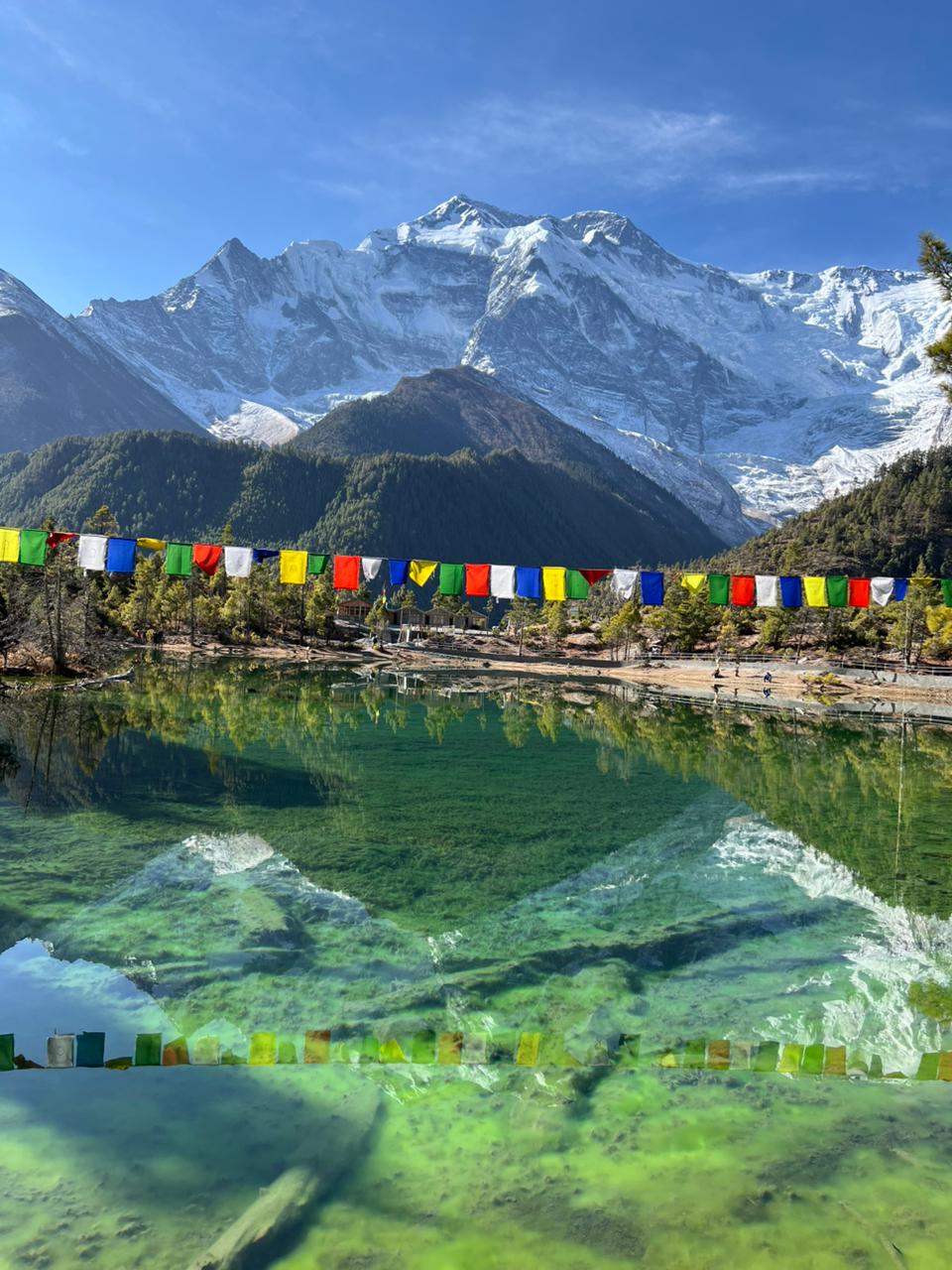
Along the way, you’ll see old monasteries, mani walls, spinning prayer wheels, and colorful prayer flags hanging between houses and along the trails. Around Kagbeni and the Upper Mustang area, the vibes are very Tibetan, with desert-style landscapes.
You stay in tea houses every night. They give you a warm bed, food, and a chance to meet other trekkers. The trail changes from warm valleys to cold, high mountains. In spring, there are flowers and rhododendrons. In autumn, the sky is clear, and the weather is perfect for walking.
And trek enthusiasts, our 15-day Annapurna Circuit itinerary also includes the Poon Hill sunrise view and a visit to Ghandruk village. It is a full journey with adventure, culture, and amazing Himalayan views, one of the best treks in Nepal.
The best time to do the Annapurna Circuit trek is during spring (March to May) and autumn (September to November). In these seasons, the weather is clear and comfortable for walking, with beautiful views and blooming flowers in spring. The Annapurna Circuit trek is moderate to challenging in difficulty, so good fitness and preparation are needed, especially for crossing the high Thorong La Pass. However, with proper acclimatization and pacing, even beginners can enjoy this unforgettable journey.
TREK HIGHLIGHTS
The Annapurna Circuit Trek is one of those routes that just has it all. You start low down in warm valleys with rice fields and waterfalls, then slowly climb into wild high passes with snow and glaciers all around. It’s like walking through different worlds in just over two weeks. You’re actually going all the way around the Annapurna Massif, so yeah, you see giants like Annapurna I, II, III, and IV, Gangapurna, and Tilicho Peak, and even a peek at Dhaulagiri if the sky’s clear.
The trail cuts through Gurung, Thakali, and Manangi villages, each with their own food and their own way of life. Stone houses, old mani walls, prayer flags moving in the wind, and some monasteries in places like Manang and Braga that look like they’ve been there forever. Along the way you reach Muktinath Temple, which matters a lot for both Hindus and Buddhists. It’s got 108 taps for holy bathing and a flame that’s been burning for centuries; kind of surreal to see in the middle of the mountains.
And it’s not just scenery or culture; it’s also the food moments. Apple pies in Marpha, yak cheese in Manang, Thakali meals in Jomsom, and butter tea up in Mustang. If you pace yourself and let your body adjust, it works for both newbies and trekkers who’ve been at it for years. Each day feels new. You turn a corner and BOOM, the whole vibe changes
Trip Highlights
- Poon Hill sunrise – classic Himalayan panorama near Ghorepani
- Thorong La Pass (5,416 m) – the highest and most dramatic point of the trek
- Muktinath Temple – sacred pilgrimage site
- Manang Valley – stunning high-altitude acclimatization stop
- Mustang region – unique dry, desert-like Himalayan landscape
- Kali Gandaki Gorge – one of the deepest gorges on Earth
- Tatopani hot springs – relaxing natural baths after trekking
Annapurna Circuit Trek 17 Days Overview
Annapurna Circuit trek is without a doubt one of the most famous long treks in Nepal that can be completed in just 15 days. Our package from Go For Himalaya takes you around the huge Annapurna mountain and its range. The length ranges from approximately 160 km to 230 km. In 15 days, you see variation in nature, culture, and weather. You start from low valleys and end at a high pass called Thorong La (situated at 5,416 m).
Well, our package of the 13-day Annapurna Circuit trek begins in Kathmandu. First, you go to the green Marshyangdi River valley. And each day, you go higher, walking through forests, rice fields, and Gurung villages. Then the trail discovers open meadows, rock cliffs, and snow-white peaks. You go through two major river valleys and cross many small villages, each with its own way of life and customs.
We will go clockwise in this trek because this way, you gain height slowly, making it easier to cross Thorong La Pass. Before the pass, the route goes through pine forests, bridges, and valleys with views of Annapurna II, Annapurna III, Manaslu, and Machhapuchhre. After the pass, the land becomes dry like a desert. This area belongs to Mustang and has a different culture.
Upon arrival at Tribhuvan International Airport in Kathmandu, you will be warmly welcomed by the team from Go for himalaya and transferred to your hotel. Take this day to rest and recover from your flight while soaking in the vibrant atmosphere of Nepal’s capital. Depending on your arrival time, you can explore the nearby streets, enjoy local cuisine, or simply relax and prepare for the exciting adventure ahead. An evening briefing with our trek guides will cover your trekking route, essentials, and safety measures.
OK, let us tell you about the first day of your trek to the Annapurna Circuit. Today, we start from Kathmandu and drive to Besisahar. But before starting the trek, you will need two important permits i.e. the Annapurna Conservation Area Permit (ACAP) and the Trekkers Information Management System (TIMS) card.
These are checked at the entry points of places like Dharapani. Don’t worry about the hassle; our company will arrange all these permits for you. You just need to provide your ID and photos as per our instructions.
This way, you can focus on enjoying the trek without any permit worries. It takes about 6 to 8 hours by bus or jeep to reach there. We travel through the Trishuli and Marshyangdi Rivers, and on the way, we pass towns like Mugling and Dumre.
Once we reach Besisahar, we change to a local jeep for the ride to Dharapani. It takes around 3 to 4 hours and the road is very bumpy, but the views make it worth it. You will see rivers, waterfalls, and small villages that feel very peaceful.
You will see waterfalls like Octopus Waterfall, Bung Waterfall, Eupss Waterfall, and Narchyang Waterfall. We also pass villages like Syange and Bhulbhule. These are small but very pretty, with stone houses, terraced fields, etc.
As we go higher, the forest changes to bamboo, pine, and colorful rhododendron trees. You may also see small Gurung villages along the way. Before reaching Dharapani, there is a small village with a few tea houses and a check-post where our ACAP and TIMS permits will be checked.
Dharapani is at 1,860 meters and is a quiet place to spend the night. Even though we don’t walk much today, this day already feels like the start of the adventure, with the mountain views and the first taste of life in the Annapurna region.
We start the second day of your Annapurna Circuit Trek in Dharapani at 1,960 meters. Our goal is Chame at 2,650 meters, the main town of the Manang district. The walk takes 5 to 6 hours. But this is not just walking. We pass old villages like Bagarchhap, Danaque, Timang, Thanchok, and Koto. Timang is special. If the sky is clear, you will see Manaslu and Annapurna II standing tall. We stop here. We let you enjoy the view.
The path takes us into pine and fir forests. The air is fresh and cool. The sound of the Marsyangdi River is always with us. Sometimes we hear waterfalls along the Annapurna trek in Nepal. However, the trail is not always easy. After Danaque, there is a short climb. We take it slow. We rest at tea houses. You smell milk tea, firewood, and mountain air. Moreover, every stop is more than a break; it is a glimpse of mountain life.
When we reach Chame village on the Annapurna Circuit Trek, you will feel the change immediately. Prayer flags flutter above the streets, and shops display jackets, boots, and trekking poles. If you have forgotten or missed any essential trekking gear, Chame is an ideal place to purchase supplies before continuing your Annapurna trek in Nepal.
The mountains feel much closer here, and you can relax your legs by soaking in the natural hot springs, a popular attraction on the Annapurna Circuit route. Many trekkers on longer Annapurna Circuit itineraries choose to stay in Chame for one to two days to explore the area and acclimatize.
Since our 15-day Annapurna Circuit trek itinerary is well-paced, we will move on the following day. The road ahead offers even more spectacular mountain views and higher altitude trails.
We kick off the day from Chame and follow the trail along the left side of the Marshyangdi River. The path goes through thick pine forests where the air feels fresh and cool. After about an hour of walking, you’ll hit Bhratang a small village famous for apple farms and prayer wheels. If you’re trekking in autumn, don’t miss the chance to try some fresh apples here.
Past Bhratang, the trees start to thin and suddenly you get these massive wide-open views of the valley. Then comes Paungda Danda, this huge curved rock wall towering above the river. It’s one of the most famous spots on the Annapurna Circuit and honestly, pretty mind-blowing.
The trail gently climbs past Dhikur Pokhari and finally you reach Pisang. This village has two parts: Lower and Upper Pisang. We’ll be staying up at Upper Pisang because the view of Annapurna II and Pisang Peak from there is absolutely stunning, especially in the evening light.
Today’s a pretty special day on the Annapurna Circuit Trek. You get peaceful forest walks, peek into traditional Himalayan villages, and soak in breathtaking mountain views. Also, it’s the first day you really start to feel that high mountain vibe that makes this trek in Nepal so unique.
- On the fourth day of the Annapurna Circuit trek is walking from Upper Pisang to Manang. This takes about 6 to 7 hours. You will pass two very old mountain villages called Ghyaru and Ngawal with stone houses. Here, you can see how people live and learn about their culture. The trail goes through forests of small trees like juniper and birch. The air is cooler because you are higher up.
Moreover, on this day you will get EPIC views of Annapurna II, Annapurna III, Annapurna IV, and Tilicho Peak. Even though the main trail does not go to Tilicho Lake, you can choose to add a side trip to Tilicho Lake from Manang if you want. This side trip takes extra days and is harder but very beautiful. Please tell us if you want to include it in your trek plan. Manang is a bigger village with shops, bakeries, and a rescue center to help trekkers if needed. You can visit local monasteries and see many colorful prayer flags waving in the wind.
Also, this part of the Annapurna Circuit trek is very important for your body to get used to the height. Rest well here before going higher to places like Thorong La Pass, the highest point on the trek. Walking slowly today helps you stay safe and healthy for the next days.
Today is a rest day at Manang. You stay at 3,540 meters, acclimatizing your body to the high altitude before going further up. It is very important to rest and rehydrate completely.
You may choose a short easy trek to Gangapurna Lake. It's 1.5 hours round trip. The lake is a beautiful glacier lake beneath the Gangapurna Glacier. It's a great place for photo opportunities and observing mountain nature close up.
Also, if you are looking for more adventure, you can trek further to Ice Lake (Kicho Tal). The trekking is around 6 to 7 hours round trip and up to 4,600 meters. Ice Lake is magical with snowy landscapes and alpine meadows. This trek is going to acclimatize your body to the altitude.
In case you don't want to go for longer hikes, you could simply walk around the village, see old monasteries, and experience local culture. The center of the Himalayan Rescue Association is also located here, assisting trekkers to stay safe.
The landscape of Manang is more like a high-altitude desert with grass fields, grazing yaks, and cold, clear air. And rest days like this are very truly very important to maintain your health and strength for the tougher days to come; for example, when crossing Thorong La Pass.
Today, you will have a relaxed walk of about 4 to 5 hours from Manang to Yak Kharka. The trail goes up steadily to 4,050 meters. And, we walk through small villages like Tanki Manang and Ghunsang. They are very quiet and calm.
Then the road changes and we see big open land where animals graze. There are only some small juniper bushes. The wind gets strong and the air feels cold because we are going higher and higher.
Yak Kharka is a tiny village with only a few lodges. From here, we can see very big mountains like Chulu West and Gangapurna. Today we walk slow because we need to get used to the high altitude. We stop and rest when we feel tired.
Today’s journey on the Annapurna Circuit Trek takes us from Yak Kharka to Thorong Phedi or High Camp. The trek typically takes around four to five hours. The trail ascends from 4,050 meters to 4,450 meters if we stop at Thorong Phedi, or to 4,800 meters if we continue to High Camp.
The decision depends on how your body responds to the altitude. If you experience symptoms of Acute Mountain Sickness (AMS), it is safer to stay at Phedi for acclimatization. However, if conditions allow and you are feeling strong, we will push on to High Camp for a shorter climb to Thorong La Pass the following day.
First, we cross a little wooden bridge over cold water. Then we walk to Ledar village. After that, the road gets rocky and big mountains are all around. Some parts can have dry landslides, so the guide walks first and checks it is safe. We walk slowly because the air is thin.
Look up to see blue sheep on the hills and big Himalayan griffon birds flying high. These show we are in the big Himalayas.
Most trekkers choose to spend the night in Thorong Phedi, as it offers warmer conditions and a safer environment for acclimatization. However, if we are feeling strong and well-acclimatized, we may continue to High Camp. Although High Camp is colder and the air is thinner, staying there makes the ascent to Thorong La Pass the next morning significantly shorter and less demanding.
This day helps our body get ready for the hard yet adventurous parts of the 15-days Annapurna Circuit Trek.
Today is the day we have been mentioning from the very beginning. Like, we’ve been training, preparing, doing everything for this day, you know? Like, we’ve been trying so hard. I’ve told you about this test so many times, and finally, the day is here. Today’s a really long day, but also super special because we’re crossing Thorong La Pass, which is like the toughest part of the whole trek.
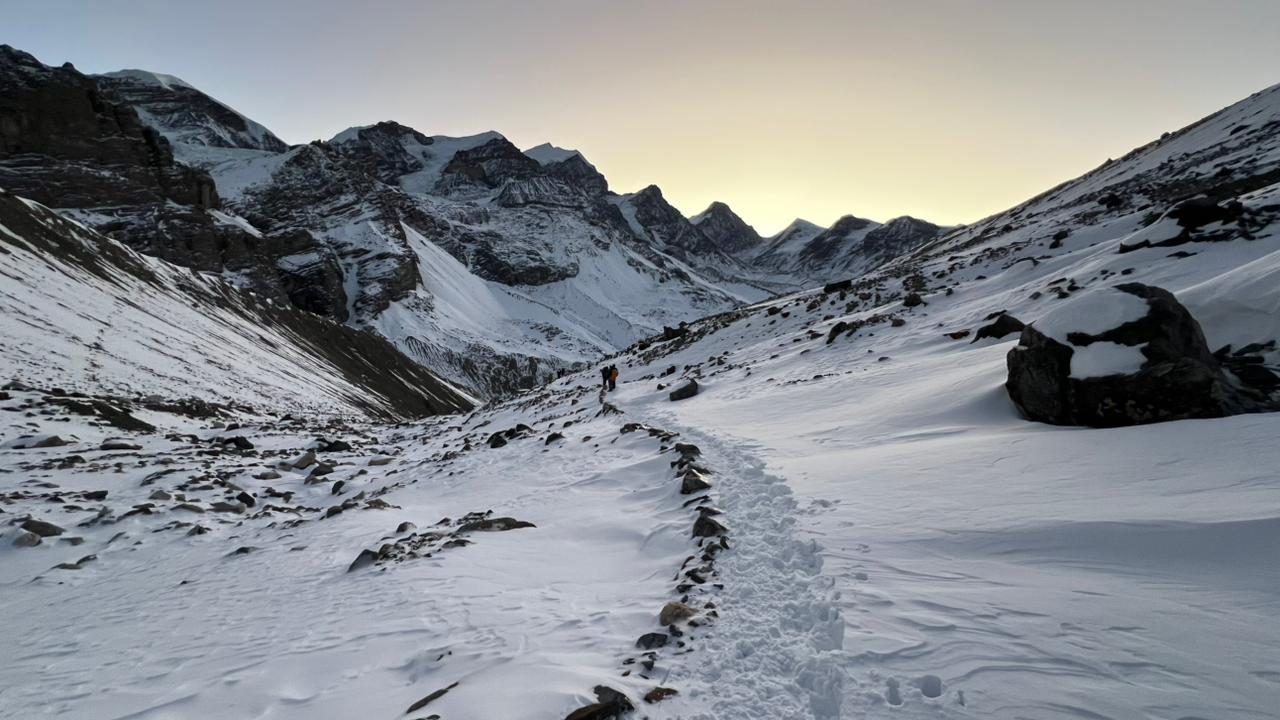
We’ll cross Thorong La Pass at 5,416 meters, the highest point on the trek. The wind’s going to be strong, so we have to start really early, like 4 AM.
If it’s the right season, there might be snow. At the top, you’ll see lots of prayer flags fluttering in the cold breeze. After that, it’s a long downhill trek to Muktinath. And yes, you’ve probably heard of Muktinath if not, it’s a holy and special place for both Hindus and Buddhists.
The whole trek today will take around 7 to 8 hours, but honestly? You got this.
On the way, you’ll pass glacier fields, rocky saddles, and of course, those iconic prayer flags at the top. Plus, the views at the pass are insane like 360 degrees of Annapurna and Dhaulagiri mountain ranges all around you.
The long walk down to Muktinath will definitely make your knees feel it! So take it slow and then reward yourself with a visit to the temple.
Today you will trek from Muktinath all the way down to Kagbeni or Jomsom. It's a trek of 4 to 5 hours, so it's not really a bad one, but you still need to keep walking, okay?
Along the way, you pass by Jharkot, home to the beautiful red-walled Sakya Gumba, which seems very impressive. The hills here start looking like desert, totally different from what you've been used to -- green valleys and white mountains.
Heads up, Jomsom gets pretty windy in the afternoon, so it's best to get there early and beat the wind.
Kagbeni is a small, peaceful village at 2,804 meters. It's peaceful and old-fashioned; often called the “Gateway to Upper Mustang,” it offers peaceful walks rather than a packed itinerary of activities. If you choose to continue to Jomsom, you will find a larger town with an airport, more hotels, bakeries, and the option to take a short side trip to the scenic Dhumba Lake.
Along the route, you'll walk along the riverbed of the Kali Gandaki and dry cliff faces.
It's a day for soaking up the new views and deciding if you like the easy village life of Kagbeni or the more lively town life of Jomsom.
Today, you have two options. Take a jeep or trek all the way down to Tatopani. The people mostly prefer the jeep because it only takes about 2.5 to 3 hrs. And along the way, the jeep will make a few stops, including a chance to explore Marpha village. Here, you can check out local shops, enjoy a tasty lunch, and just you know, soak in the village vibes before continuing the drive.
If you are up for a challenge, trekking takes about 10 hours or more. The route drops steeply from 2,720 m to 1,200 m, so your legs will scream at you for sure.
However, the route is awesome because you follow the Kali Gandaki gorge, which is the world’s deepest gorge with huge cliffs and riverside forests all around. On the way, you’ll pass small villages like Ghasa and Dana, and you will get to see the beautiful Rupse Chhahara waterfall.
When you get to Tatopani, you get to soak in natural hot springs. By the way "Tatopani" means hot water in Nepali and we think it’s perfect to soothe your tired muscles after Thorong La Pass. If the place is crowded or packed, don’t worry! You can always wait and take your hot spring bath the next morning instead.
Today’s a big one, we’re trekking from Tatopani to Ghorepani, and yeah, it’s pretty much all uphill. We start at around 1,200 m and climb all the way up to about 2,860 m, so your legs will definitely get a workout. It’ll take about 6 to 7 hours, so be ready for a long day.
Along the way, you’ll pass through small, beautiful villages like Ghara, Shikha, and Chitre. Most of the path is stone steps, so your legs won’t get much rest. You’ll spot terraced farms with people working, and maybe some goats or buffaloes hanging around too.
After the villages, the trail goes through stunning rhododendron forests and oak woods. If it’s blooming season, you’ll see the trail pop with red, pink, and white flowers everywhere. And if luck’s on your side then you might spot the Danphe Nepal’s national bird with those crazy colorful feathers.
When you finally get to Ghorepani, you’ll be so happy it’s this cozy mountain village full of tea houses where you can kick back. And the views? Seriously, wow. You can see big peaks like Dhaulagiri and Annapurna South right from there. The climb’s tough and tiring, but trust me, the views and the vibe make it totally worth it.
Are you ready for one of the most famous views in Nepal? Today we wake up very early still dark outside! We walk about 45 minutes uphill to Poon Hill (3,210 m). When the sun comes up, you will see Dhaulagiri, Annapurna I, Annapurna South, and Machhapuchhre (Fishtail) shining gold. Take your time here, enjoy the fresh mountain air, don’t forget take some photos to remember.
After sunrise, we go back to Ghorepani for a warm breakfast in a teahouse. Then we start trekking through rhododendron forest. The moss, orchids, and soft light make it feel like a magic jungle. Listen, you might hear birds singing! Tadapani is waiting for us at the end, a small peaceful village surrounded by forest, with clear views of snow peaks and green valleys.
Today is mostly downhill your knees will feel it, but the views will make you smile. We trek 3–4 hours to Ghandruk, one of the most beautiful Gurung villages in the Annapurna region. The trail passes rhododendron and oak trees, stone stairs, and small rivers. Look around you can still see Annapurna South, Hiunchuli, and Machhapuchhre on the way.
When you get to Ghandruk, don’t miss visiting the Gurung Museum and walking among the old stone houses. Also, try on some traditional Gurung clothes it’s fun and a great way to connect with the local culture, plus you can take great photos to remember your trip.
Then we take a jeep down the Modi Khola valley through Kimche and Nayapul to Pokhara. When you arrive, you will feel the change from mountain trails to a calm lakeside city with boats, cafes, and warm weather.
It’s time to go back to Kathmandu. You can take the road for 6–7 hours with views of rivers, hills, and villages along the Prithvi Highway, or you can take a short flight (25–30 minutes) and maybe see the mountains from above.
As your Annapurna Circuit Trek comes to an end, you carry with you unforgettable memories of the entire journey, from the first steps in Dharapani, trekking through pine and rhododendron forests and charming villages like Chame, Pisang, and Manang, to crossing the highest point at Thorong La Pass. You experienced the holy Muktinath Temple, peaceful Kagbeni and lively Jomsom, relaxing hot springs at Tatopani, the sunrise views at Poon Hill, and the warm hospitality of Gurung villages like Ghandruk.
Every day was different. You experienced crazy mountain views, cool local culture, and all the adventure vibes. Hope it made you feel happy and maybe a little blown away.
We at Go For Himalaya loved being part of your trek. If you want to explore more of Nepal, we’ve got tons of other treks and tours ready to roll. Whenever you’re down for the next trip, we’ve got your back with all the care and experience.
On your final day, transfer to Tribhuvan International Airport for your onward flight. Depending on your flight time, you may have a few hours to stroll through Thamel or visit nearby sites. This marks the end of your unforgettable Annapurna Circuit journey with Go for Himalaya, leaving you with memories of majestic mountains, rich culture, and lifelong friendships. Our team will bid you farewell, wishing you safe travels and hoping to welcome you back for future adventures in Nepal.
Cost Includes
What is included in this trek package?
- Airport transfers in Kathmandu.
- Domestic flight and all ground transportation as per itinerary
- Hotel accommodation in Kathmandu and Pokhara (as per itinerary) with breakfast.
- Teahouse accommodations during the trek.
- All meals (breakfast, lunch, dinner) during the trek.
- Annapurna Conservation Area entry permit.
- TIMS (Trekkers' Information Management System) card.
- Experienced, English-speaking trek guide.
- Porter(s) to carry luggage (1 per 2 trekkers).
- Trekking map and group medical kit
- Welcome and farewell dinners in Kathmandu.
What is excluded in this trek package?
- International flights to/from Kathmandu.
- Nepal entry visa fee.
- Mandatory travel insurance (including emergency rescue).
- Personal trekking equipment.
- Personal expenses (laundry, calls, internet, etc.).
- Alcoholic beverages and bottled water.
- Additional meals and beverages not specified.
- Tips for trekking staff
Adventure Highlights
1. The Jeep Ride from Besisahar to Dharapani
Your Annapurna Circuit trek starts with a jeep ride from Besisahar to Dharapani. You see the green Marsyangdi and Trishuli river valleys far below.
Every now and then you can hear the water thundering. The ride is bumpy and partially uncivilized. But it is thrilling. It is the first taste of real trekking in Nepal. When you reach Dharapani, your face is covered with dust and your heart with excitement.
2. Thorong La Pass Crossing, the Highest Point
Thorong La Pass. Yeah, that’s the toughest part of the whole Annapurna Circuit. It’s up at 5,416 meters, so the air’s thin and cold and the wind? Brutal.
Every step feels heavy, like your legs don’t want to move. But then you get to the top, and WOW, the view just hits different. Annapurna and Dhaulagiri stand there, huge and wild all around you.That’s when the pain turns into something else: pride, a win you won’t forget.
3. Trekking Through Rhododendron Forests and Alpine Meadows
On the Annapurna Circuit Trek, the trail changes every day so it doesn’t get boring. Near Ghorepani and Tadapani, you’re walking through thick rhododendron forests.
In spring, the flowers are bright red, pink, and white, and you hear little birds singing above. The path is cool and shaded by trees.
As you go higher, trees get smaller. Then the trail opens up into big alpine meadows.
Sometimes you see yaks grazing or small wooden huts where herders stay. From the meadows, the views clear and you can see snowy giants like Annapurna South and Machhapuchhre.
And, DAMN, the switch from forest to meadow? It literally feels like stepping into a new world in one day.
4. Experiencing Local Culture in Mountain Villages
One of the best parts of the Annapurna Circuit trek offered by Go For Himalaya has to be meeting differnt ethnic groups of the mountain villages! You pass Gurung and Thakali communities with stone houses, flat roofs, and colorful prayer flags moving in the wind.
In some villages, there are small Buddhist monasteries where locals spin prayer wheels. You may stop at a tea house run by a family, offering you tea and dal bhat (rice with lentils) for energy.
If you come during festival time, you might see people dancing in traditional clothes. These short moments with local people make the trek more than just walking it becomes a chance to learn about the life and culture of the Annapurna region.
5. Relaxing in Tatopani’s Natural Hot Springs
After walking for such a long duration, Tatopani acts as a perfect spot on this Annapurna Circuit trek. This tiny settlement is famous for its natural hot springs near the Kali Gandaki River. The water feels warm and soft and local people say it can help relax tired legs and muscles.
In the evening, the springs are busy with both trekkers and villagers. If it is too crowded, you can visit early the next morning when it is a little less crowded. Nearby, there are small shops selling snacks, drinks, and trekking supplies, so you can enjoy a tea after your bath.
Resting in the hot water while looking at the hills around you is one of the most relaxing parts of the whole trek.
Scenic Highlights
1. Amazing Mountain Views of Annapurna and Dhaulagiri
The mountain views on the Annapurna Circuit? We are not lying, they’re next level. You will spot huge peaks like Dhaulagiri (over 8,100 meters), Annapurna I, and the famous Machhapuchhre, which people call Fishtail because, WELL, it kinda looks like a fish tail.
The trail goes through the Kali Gandaki Gorge, which is damn deep and is the deepest gorge on the planet. Along the way, you’ll walk through forests full of rhododendron and oak trees. If you’re there in spring, the flowers make everything look super colorful.
All this just makes the trek so unique; you don’t get views like this everywhere.
2. The Beautiful Kali Gandaki River Valley
The Kali Gandaki River flows through the deepest valley in the world. It’s pretty dramatic with tall cliffs and green terraces everywhere.
With the trail, you’ll cross some swinging suspension bridges over the fast-flowing river, which is always exciting.
On the way back, loads of trekkers stop to check out famous waterfalls like Rupse and Octopus Falls. They’re super cool and refreshing spots to rest.
The valley itself mixes rocky mountains with green forests, making the Annapurna Circuit trail really interesting from start to finish.
3. Changing Forests and Colorful Flowers
The forest on the Annapurna Circuit trek changes as you go higher. The initial pine and rhododendron forests are observed, which are ablaze with colorful spring flowers.
The rhododendron flowers bloom beautifully around Ghorepani and Tadapani.
Some birds, including the living danphe, Nepal’s national bird, live in the forest. Roomy open mountain meadows remain as the trees decrease in size and eventually vanish higher up. All around you are peaks covered in snow.
The trek is enjoyable and stunning to see because of this change in the environment.
4. Optional Side Trip to Tilicho Lake
If you want to do more, you can add a side trip to Tilicho Lake. Tilicho Lake is one of the highest lakes in the world, at about 4,919 meters. The water is bright blue, and the lake is surrounded by tall cliffs and snow.
This trip needs extra days and good preparation, but is very worth it if you want to see a special part of the Himalayas. This side trip makes the Annapurna Circuit trek even more exciting for adventure lovers.
Cultural Highlights
1. Authentic Gurung and Thakali Villages
The Annapurna Circuit trek, organized by our team at Go For Himalaya, takes you to Gurung and Thakali villages. You’ll be trekking with our professional guides in the Lower Marsyangdi Valley. And this makes you pass the main villages of the trail, which include Besisahar, Bhulbhule, Syange, Chamje, Tal, Danakyu, and Bagarchhap. You’ll be amazed to see the green hills, rice terraces, and stone houses.
As you ascend, you reach Chame, Pisang, Ngawal, and Manang. These are all Manangi territory (a community that represents the Annapurna region at heart). Their houses are built in Tibetan style with flat roofs and stacks of firewood outside.
Not just there. Even the Gurung villages of Ghandruk and Dharapani are known for their warm hospitality. We highly recommend trying out their traditional dresses and glancing at the farming lifestyle. The Thakali villages around Jomsom, Marpha, Tukuche, and Kagbeni are famous for apple orchards, whitewashed stone houses, and tidy narrow lanes.
Marpha is especially known for its apple brandy and pies, while Kagbeni has that old gateway and a medieval feel, marking the start of Upper Mustang.
In all these villages, you see prayer flags, mani walls, spinning prayer wheels, and hear the sounds of monks chanting. Some important monasteries include Braga Monastery in Manang, over 500 years old with stunning murals and chortens; Jhong Monastery in Kagbeni, and the small but beautiful gompas in Marpha and Pisang.
Meeting locals here means learning about Buddhist beliefs, farming traditions, yak herding, and tasting Thakali set meals, butter tea, yak cheese, and dried meats. The warmth of these communities makes the trek just as unforgettable as the mountains.
2. Buddhist Monasteries and Spiritual Feelings
You will see many Buddhist monasteries and prayer flags along the trail. Monasteries in places like Manang and Kagbeni are calm spots where you can rest and think.
They also show beautiful Buddhist art and building styles. The prayer flags wave in the wind, carrying old prayers and blessings for peace.
In Manang, there is the famous Braga Monastery, over 500 years old, built on a cliff with ancient paintings, statues, and views of Annapurna II and Gangapurna. You could sit there for hours; it’s that calm.
Be sure to spin the prayer wheels along the way; we believe it brings good luck. This strong Buddhist culture makes the Annapurna Circuit trek more than just walking; it gives a peaceful and spiritual feeling.
3. Yaks and Porter Life
Yaks and porters have been part of the Annapurna Circuit trek for ages.
Yaks are big, fluffy, and strong. They carry stuff like food, gas, and gear way up high where it’s cold and hard to breathe. You’ll see them mostly in places like Manang, Yak Kharka, and Thorong Phedi. Sometimes they wear colorful clothes or have bells around their necks, which looks cool.
Porters are local people who carry heavy bags on their backs with a strap over their heads called a namlo. Some carry 20 to 30 kilos or even more, and they’re faster than most trekkers!
They work hard to keep the lodges and villages stocked. Watching them makes you realize how tough trekking here really is. These folks are super important because without them, the whole trail wouldn’t work.
4. Special Mountain Festivals
If you are so fortunate and are there at the right moment, you can experience some vibrant festivals like Mani Rimdu or Dumje in the mountain villages. They include pleasant masked dances, traditional music, and religious ceremonies, all with a Buddhist culture theme.
Even if you miss the actual festival during your trek, the fact that they actually do take place shows how true and vibrant the culture is here.
FAQs For Annapurna Circuit Trek
So for Annapurna Circuit, you need two permits i.e. the Annapurna Conservation Area Permit, or ACAP, and the TIMS card, which is basically a tracker for trekkers. Don’t stress though; we handle all that for you if you book with us. Just send over a copy of your passport and a photo, and we’ll sort the rest. If you’re going solo or doing your own thing, you can grab these permits in Kathmandu or Pokhara, but with us, it’s all done so you don’t have to bother.
Along the trek, you’ll stay mostly in cozy tea houses and guesthouses. Rooms are simple, usually with shared bathrooms, and heating might be limited at higher places. We include three meals a day breakfast, lunch, and dinner (BLD)in our package. Typical meals are local dishes like dal bhat, noodles, and soups, with some basic continental options. Snacks and extra drinks are not included and are available to buy on the trail but can be a bit pricey.
YES!Lots of people do the Annapurna Circuit solo; like every season, you’ll see them out there. The trail’s marked pretty well and it’s busy enough that you end up running into the same faces over and over. That said, a guide or porter just makes life easier. Guides know all the turns and where to stop, and a porter carrying your bag on those steep climbs feels like heaven. You pay extra for the porters, sure, but some days it’s worth it.
Yeah, beginners can totally do the Annapurna Circuit as long as they prep for it and don’t rush. It’s a long walk and Thorong La Pass is no joke, so you’ve got to pace yourself and actually use the rest days to acclimatize. Our trips are set up to make it easier for first-timers; the days aren’t crazy long and the guides know how to keep you safe. If it’s your first time in the Himalayas, this trek will blow your mind. You get insane views, meet people from mountain villages, and see a mix of culture you won’t forget.
Honestly, pack smart for the Annapurna Circuit or you’ll regret it halfway up.
Hiking Boots are must. They should be waterproof and comfy, and for the love of your feet, break them in before the trek.
Clothes? Think layers, please. Start with something warm under, throw on a fleece, and then have a waterproof jacket and pants ready because the weather flips fast.
Trekking poles are lifesavers, especially on those long downhills where your knees start screaming. Nights get real cold, so yeah, a 10-degree Celsius sleeping bag is worth it. Sunglasses are non-negotiable, the same with sunscreen; the sun up there will burn you even if it feels cold. Hat and gloves for mornings when you don’t even want to leave the sleeping bag.
Bring water purification tablets or a filter. A small backpack, like 20–30 L, is good for snacks, water, extra layers, and your camera. And don’t forget a headlamp. Some mornings you start before sunrise, and it’s pitch dark. Hygiene stuff too: wet wipes, toilet paper, sanitizer, and if you care about the planet, biodegradable soap.
First aid kits are personal but have blister patches, painkillers, and altitude sickness meds. If you don’t have gear like a down jacket or poles, Kathmandu and Pokhara rent them cheap, but I like having my own stuff it just feels better.
Most toilets on the Annapurna Circuit are simple squat toilets or pit toilets you’ll find in tea houses and guesthouses. Down in the lower areas you might get a flush toilet but the higher you go the more basic it gets. Bring your own toilet paper and some hand sanitizer because they’re not always stocked. Cleanliness isn’t the same everywhere but the tea houses try their best. It’s just part of the whole trek experience.
Altitude sickness is a real thing on this trek because you go pretty high:Thorong La Pass is 5,416 m after all. The best way to avoid it is to walk slowly, take the rest days seriously, and keep drinking water even if you don’t feel thirsty. On our guided trips we plan acclimatization days and the guides keep an eye on you. If you start getting a headache, feel dizzy, or get that sick feeling, tell your guide right away. Your health comes first and if things get bad, we know how to get you down fast.
Yes, you’ll find mobile signal in most villages on the Annapurna Circuit but it comes and goes the higher you go or the more remote the place is. A few teahouses and lodges have Wi-Fi, though it’s usually slow and sometimes you have to pay a little. It’s best to just expect a patchy connection and focus on the trail instead of your phone. You can stay in touch here and there but forget about having internet all the time.